
Most Nissan vehicles require routine maintenance every 5,000 to 7,500 miles or every 6 months, whichever comes first. Vehicles operated under severe driving conditions—such as frequent stop-and-go city traffic, severe summer heat, high-mileage commuting, or regular heavy towing—should follow a shortened 3,500 to 5,000-mile service schedule. Sticking to these intervals preserves mechanical reliability, protects factory warranty coverage, and prevents minor component wear from turning into expensive engine or transmission repairs.
Driving environments play a major role in how quickly vehicle fluids and wear items degrade. For drivers in Southaven who deal with hot summer weather and daily interstate commutes, vehicle engines experience heightened thermal stress. Under high heat, engine oil breaks down faster, losing its viscosity and ability to coat internal bearings effectively.
Adhering to severe-service guidelines ensures that engine oil, filters, and essential fluids are refreshed before thermal degradation causes internal scoring or sludge buildup. During a standard interval visit, technicians perform a comprehensive oil and filter change using full synthetic oil formulated to maintain stability across extreme temperature swings.
Staying on top of scheduled service also protects long-term mechanical systems, including continuously variable transmissions and sophisticated braking components. When you bring your car in for routine care at our service center on Covington Pike, every system is inspected against factory thresholds. If you have questions about your specific mileage interval, reaching out to our certified technicians at (901) 373-2800 allows our team to review your vehicle's history and recommend the ideal care plan.
Table of Contents
- What Is the Recommended Nissan Factory Maintenance Schedule?
- What Is Included in a Standard Nissan Multi-Point Inspection?
- Why Choose Genuine Nissan OEM Parts Over Aftermarket Alternatives?
- How Do Express Service and Routine Maintenance Costs Work?
- Common Questions About Nissan Service and Recall Checks
- How to Schedule Authorized Nissan Service
What Is the Recommended Nissan Factory Maintenance Schedule?
The recommended factory maintenance schedule for Nissan vehicles operates on incremental 5,000-mile to 7,500-mile visits, supported by major service milestones at 15,000, 30,000, 60,000, 90,000, and 120,000 miles. Each milestone expands the scope of maintenance from basic fluid updates to in-depth system flushes and mechanical inspections.
- 5,000 to 7,500 Miles (or 6 Months): Replace engine oil and oil filter, rotate tires, inspect tire tread depth and inflation pressure, and perform a preliminary brake pad check.
- 15,000 Miles (or 12 Months): Complete all basic interval services, replace the engine air filter, replace the cabin air filter, inspect steering gear, linkage, and axle components.
- 30,000 Miles (or 24 Months): Complete all 15,000-mile services, replace brake fluid, inspect exhaust system heat shields, and check fuel lines and tank vapor hoses.
- 60,000 Miles (or 48 Months): Complete basic and intermediate services, inspect drive belts, replace spark plugs on select models, and perform an in-depth Xtronic continuously variable transmission fluid inspection.
- 90,000 to 120,000 Miles: Perform complete engine coolant flushes, inspect intake and exhaust valves, replace long-life spark plugs, and inspect manual or automatic drivetrain gear oils.
Engine designs across the lineup feature distinct maintenance priorities based on their mechanical layouts. For example, crossover models powered by the 1.5L variable-compression turbocharged engine require precise oil viscosity management to safeguard high-pressure turbocharger bearings. Sedans equipped with the 2.5L engine rely on steady belt and tensioner checks to keep engine timing precise over tens of thousands of miles.
Heavy-duty three-row vehicles utilizing a 3.5L engine with a 6,000 lbs towing capacity place added stress on brake friction linings and differential fluids when hauling cargo. Drivers tracking their maintenance logs while upgrading to newer models can review factory requirements alongside our new Altima inventory to see how modern service technology simplifies vehicle upkeep.
What Is Included in a Standard Nissan Multi-Point Inspection?
A standard Nissan multi-point inspection evaluates three main categories of vehicle health using a clear color-coded system: green indicates satisfactory condition, yellow alerts drivers to components requiring upcoming attention, and red signals critical items that demand immediate repair. Certified technicians systematically review under-hood components, chassis structures, braking systems, and tires to establish an exact baseline of vehicle condition.
- Tire Condition and Alignment Check: Technicians measure tread depth in 32nds of an inch across inner, center, and outer tread blocks, checking for uneven wear caused by suspension misalignment or improper inflation pressure.
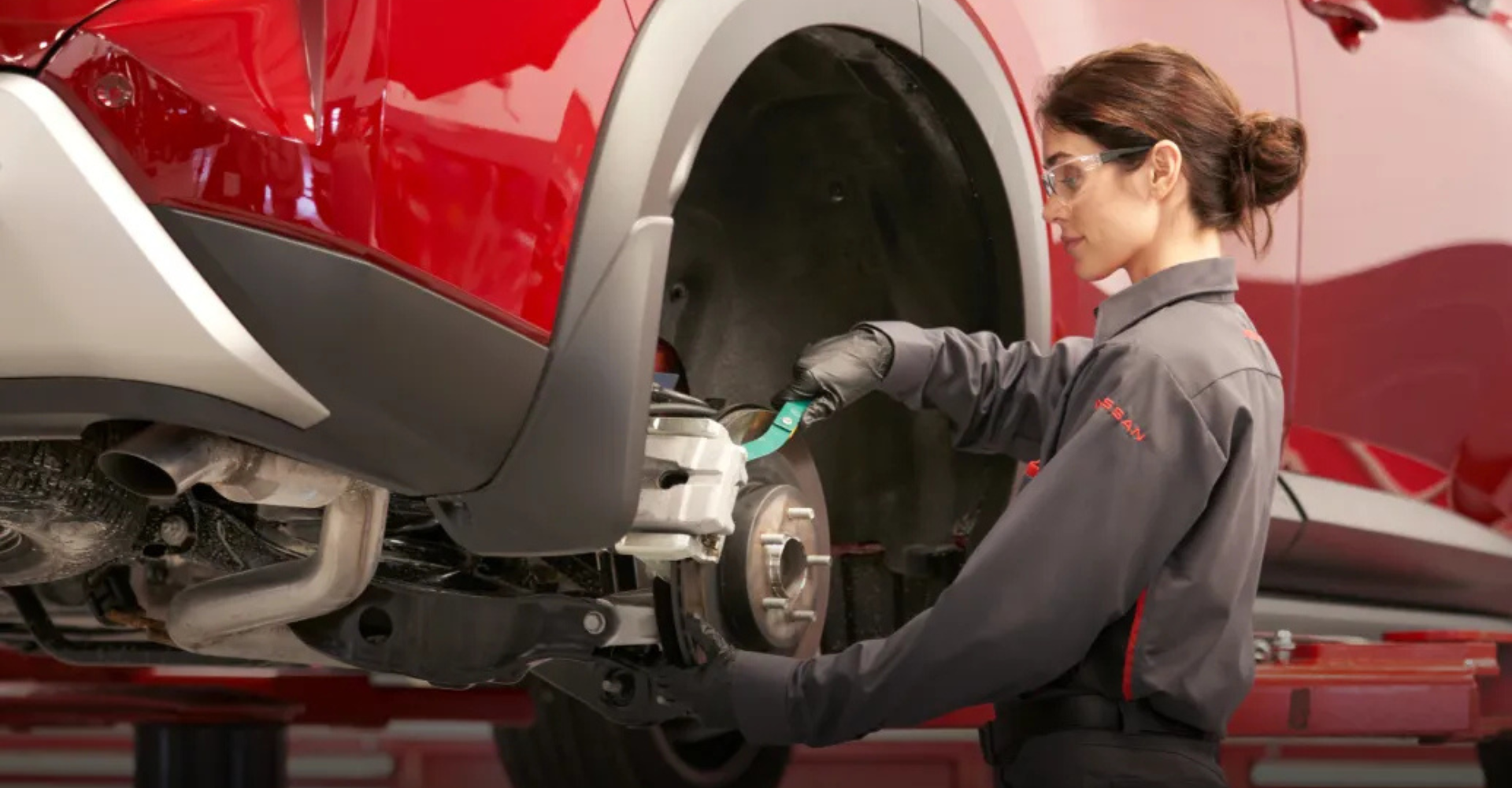
- Brake System Assessment: Inspection includes measuring front and rear brake pad friction thickness, examining rotor surfaces for scoring or heat discoloration, and inspecting hydraulic brake lines and calipers for fluid leaks.
- Under-Hood Diagnostics: Technicians perform digital battery health testing to record cold-cranking capacity, test engine coolant freezing and boiling points, evaluate belt tension, and inspect air filtration housing.
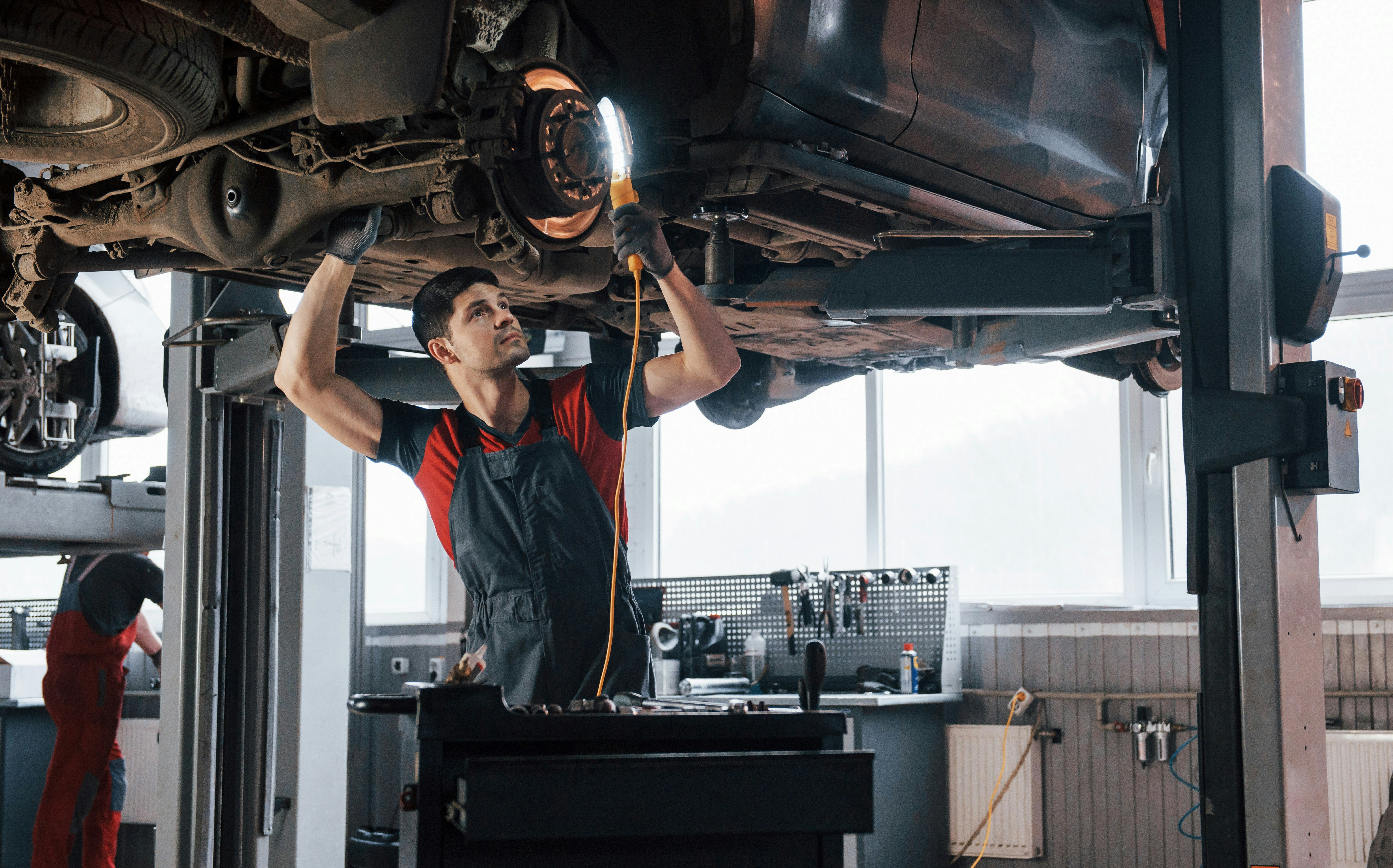
- Chassis and Steering Components: Vehicle suspension struts, shock absorbers, ball joints, steering rack boots, constant-velocity joint boots, and exhaust piping are checked on a hydraulic lift for physical damage or play.
Inspections adapt based on powertrain technology. On traditional gasoline models, technicians prioritize engine intake seals, oil pan gaskets, and exhaust manifold heat shields. For electric vehicles, like those found in our new Ariya inventory, multi-point checks shift focus to high-voltage battery coolant loops, EV reduction gear seals, thermal management pumps, and electronic drive motor mounts.
Why Choose Genuine Nissan OEM Parts Over Aftermarket Alternatives?
Genuine Nissan OEM parts match the exact engineering drawings, material specifications, and structural tolerances established by the original vehicle manufacturer. Choosing factory components ensures exact mechanical fitment, preserves factory performance standards, and protects system integration across advanced vehicle safety modules.
- Exact Fitment: Factory parts fit flush into mounting locations without modifying brackets, forcing clips, or trimming plastic housings.
- Factory-Backed Warranty: Genuine replacement parts installed by authorized service departments come backed by a 12-month/12,000-mile limited warranty for repair confidence.
- Material Quality: Original equipment oil filters feature internal anti-drainback valves that prevent dry engine starts, while OEM brake pads utilize proprietary friction formulas designed to minimize rotor wear and dusting.
- Electronic Compatibility: Advanced sensors and electronic actuators communicate seamlessly with factory engine control modules without triggering false trouble codes or dashboard warnings.
Generic aftermarket parts often rely on compromise dimensions and cheaper composite materials to fit multiple vehicle makes and models simultaneously. This universal design approach frequently leads to loose tolerances, excess vibration, early component fatigue, or premature noise.
When replacing wear items like cabin filters, engine air filters, wiper blades, or brake pads, staying with genuine components preserves the quiet ride and crisp handling engineered into the vehicle from day one. Owners seeking cost savings on certified components can explore current service and parts specials to access competitive rates on factory replacement items.
How Do Express Service and Routine Maintenance Costs Work?
Nissan Express Service delivers rapid routine care—such as oil changes, tire rotations, air filter swaps, and battery replacements—without requiring an advance service reservation. Maintenance costs are structured around the specific fluid volume, filter type, and labor requirements of each job, with upfront transparency on all recommended services.
For busy commuters living in Germantown, express service lanes provide an efficient way to handle routine upkeep during morning hours without disrupting personal schedules. Express technicians work in dedicated bays using specialized tools to complete oil services, tire pressure updates, and multi-point checks in a streamlined sequence.
When technicians scan vehicle modules during an express visit, they check for diagnostic trouble codes stored in computer memory, catching early sensor faults before warning lights appear on the instrument cluster. Maintaining a steady schedule of minor express services prevents component binding, uneven tire wear, and fluid contamination, keeping long-term maintenance costs far lower than major component overhauls.
When your vehicle approaches a major mileage interval or requires advanced system care, scheduling service online connects you directly with advanced diagnostic appointment times.
Common Questions About Nissan Service and Recall Checks
Q: How can I check if my Nissan has an open safety recall?
You can verify open safety recalls by locating your vehicle's 17-digit Vehicle Identification Number (VIN), which is printed on your registration card and visible on the lower driver-side corner of the windshield. Entering this VIN into the official Nissan online recall portal or the NHTSA database reveals any outstanding safety campaigns. If your vehicle has an open recall, authorized technicians perform all required safety software updates or hardware replacements at no cost to you.
Q: How often should Nissan transmission fluid be inspected or replaced?
Nissan recommends inspecting Xtronic continuously variable transmission fluid every 20,000 to 30,000 miles, with a formal fluid deterioration check conducted at 60,000 miles. Technicians connect diagnostic tools to evaluate thermal breakdown data stored within the transmission control module. Depending on driving severity, heavy towing usage, or diagnostic readings, fluid replacement is performed to maintain hydraulic valve pressure and prevent belt slip.
Q: What is the difference between normal and severe maintenance schedules?
The normal schedule applies to vehicles operated on long highway trips under temperate weather conditions with minimal idling. The severe schedule applies to cars driven regularly in heavy city traffic, extreme summer heat, short trips under 5 miles, dusty environments, or while towing trailers. Severe schedules shorten engine oil and filter change intervals from 7,500 miles down to 3,500 or 5,000 miles to counter rapid fluid oxidation.
Q: How often do engine air filters and cabin air filters need replacement?
Engine air filters and cabin air filters should generally be replaced every 15,000 to 30,000 miles or every 12 to 24 months. Operating your vehicle in dusty conditions, heavy construction zones, or high-pollen environments accelerates filter clogging. A dirty engine filter reduces intake airflow and combustion efficiency, while a clogged cabin air filter restricts heating and air conditioning airflow while allowing dust to accumulate inside the cabin.
Q: Why is battery testing critical before summer heat sets in?
High summer temperatures cause internal battery fluid evaporation and accelerate grid corrosion far more aggressively than cold weather. Heat weakens internal lead plates, causing sudden chemical failure that leaves drivers stranded without warning. Routine digital battery testing during spring service visits measures cold-cranking reserve power and internal resistance, allowing technicians to identify failing batteries before complete electrical failure occurs.
How to Schedule Authorized Nissan Service
Scheduling authorized Nissan service is simple, direct, and accessible through our online service portal or by calling our dedicated coordination desk. Keeping detailed service records and completing maintenance at certified facilities protects your vehicle's warranty status, maintains peak fuel efficiency, and enhances trade-in value when you decide to transition to a new vehicle down the road.
Our factory-trained technicians utilize specialized diagnostic equipment, brand-specific service tools, and genuine OEM parts to complete every job to exact manufacturing standards. Whether your vehicle requires a routine oil service, brake pad replacement, or a comprehensive 60,000-mile inspection, our team ensures your vehicle leaves operating at its peak potential.
To schedule your next maintenance visit, drop by our service center on Covington Pike or give our team a quick call to set up a convenient appointment time.