
Choosing the right Nissan electric car depends on your daily commute and body-style needs: buyers seeking a spacious, whisper-quiet crossover with available dual-motor all-wheel drive should choose the Nissan ARIYA, while commuters wanting an affordable, agile electric hatchback for daily city driving are best served by the Nissan LEAF. Both vehicles eliminate gas station visits, but they target distinct driving preferences and budget ranges.
Our team at Jim Keras Nissan helps buyers navigate the transition to zero-emission driving with real-world guidance. For local commuters making the daily drive along the I-55 corridor into downtown Memphis from Southaven, electric driving eliminates daily fuel stops while delivering instant motor torque for effortless highway merging. The Nissan electric vehicle lineup provides two distinct approaches to zero-emission driving. The compact Nissan LEAF delivers nimble city driving efficiency with an EPA-estimated range of up to 303 miles on configured models equipped with a 75-kWh battery. Meanwhile, the all-electric Nissan ARIYA crossover offers expanded cargo space, elevated seating height, up to 304 miles of EPA-estimated range on select trims, and optional dual-motor confidence.
Deciding between these two models comes down to cabin requirements, travel habits, and charging preferences. If your primary goal is a versatile daily runabout with low operating costs, the LEAF provides unmatched entry-level value. If your household needs executive-level interior quietness, premium seating comfort, and all-weather traction control, the ARIYA fits the bill. To experience both side-by-side, visit our Memphis showroom on Covington Pike, start by applying for financing online, or give our sales specialists a quick call at (901) 373-2800 to schedule a test drive.
Table of Contents
- What Electric Vehicle Models Does Nissan Offer Currently and for the Future?
- What Are the Main Differences Between the Nissan ARIYA and Nissan LEAF?
- Which Nissan ARIYA Trim Offers the Longest Driving Range and What Is the Price Range Across Trims?
- How Does Nissan e-4ORCE All-Wheel Drive Work and How Does ARIYA Compare to Tesla Model Y?
- How Does Leasing a Nissan ARIYA Compare to Purchasing One?
- What Buyers Ask Most About Nissan Electric Vehicles
What Electric Vehicle Models Does Nissan Offer Currently and for the Future?
Nissan currently offers two distinct fully electric passenger vehicles in North America: the Nissan LEAF compact hatchback and the Nissan ARIYA crossover SUV, with plans to expand its global electrified lineup under the Nissan Ambition 2030 strategy. Together, these models span from accessible urban transit to midsize crossover comfort.
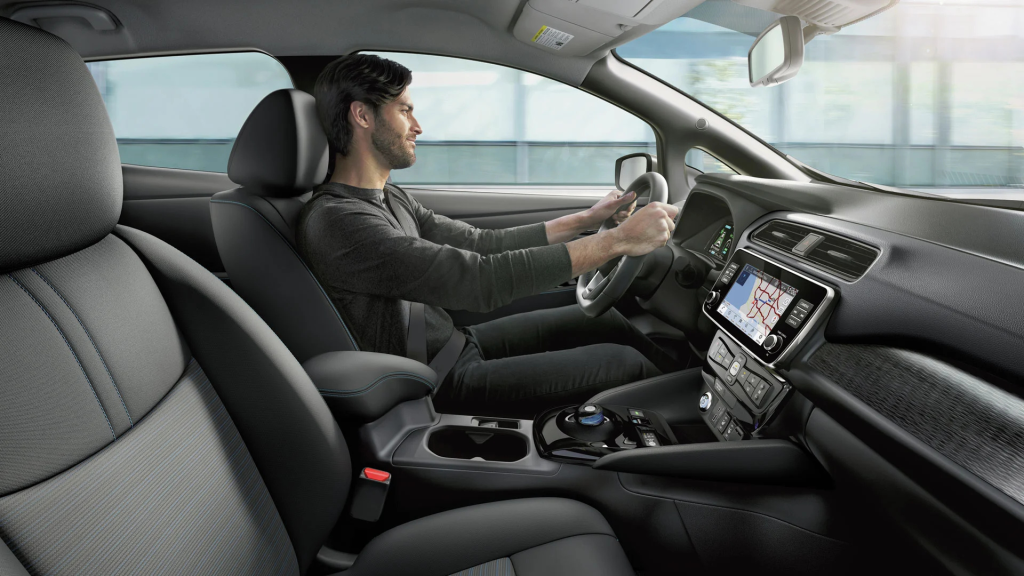
The Nissan LEAF established the mass-market electric vehicle segment over a decade ago and remains a cornerstone of practical electrification. Modern LEAF models feature updated battery options, advanced driver-assist capability, built-in NACS port access, and fast-charging capability reaching 10% to 80% charge in about 35 minutes on compatible 150 kW DC fast chargers. Its compact hatchback footprint makes parking effortless while keeping utility high with split-folding rear seats.
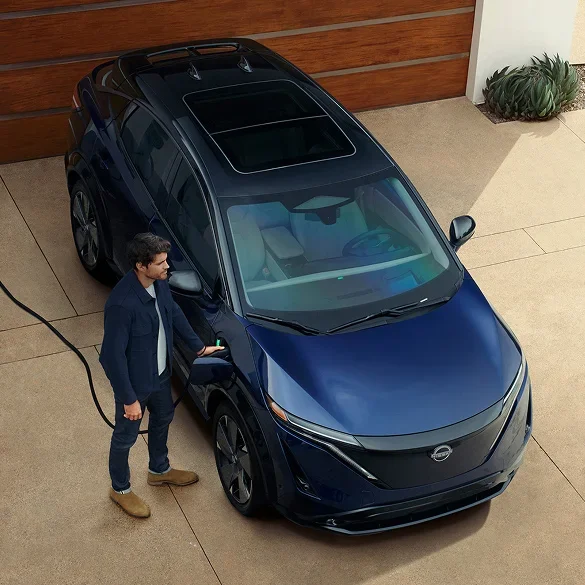
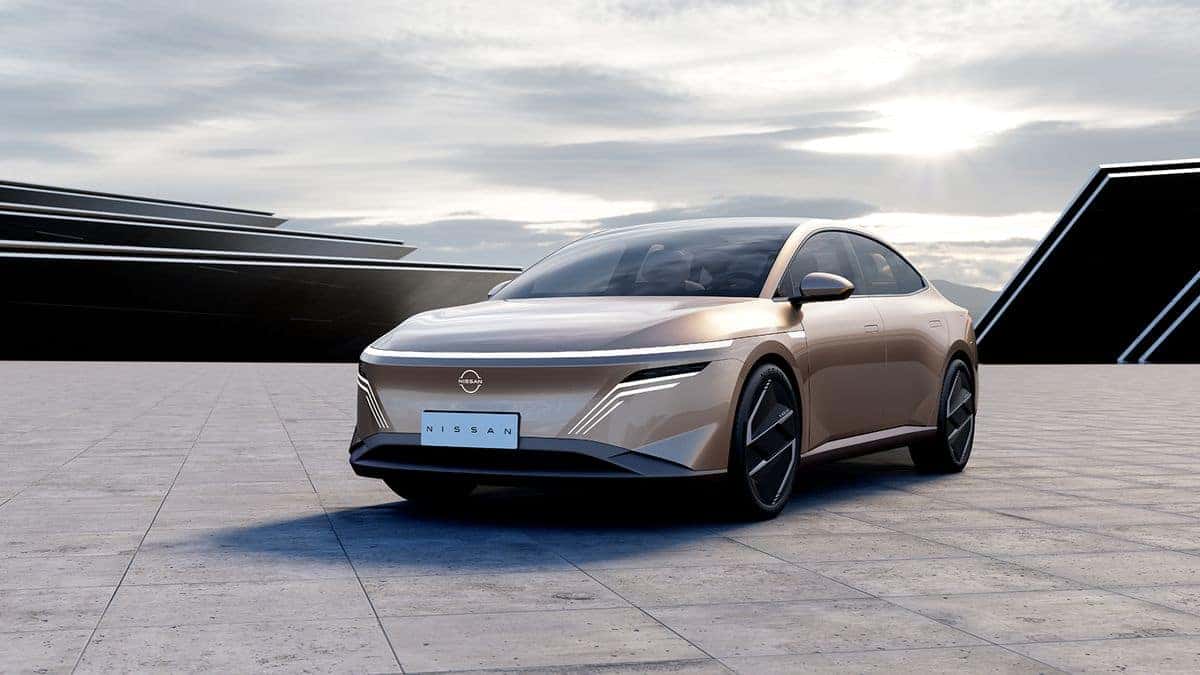
The Nissan ARIYA serves as the flagship electric crossover, offering front-wheel drive or dual-motor all-wheel drive across a simplified trim lineup. Designed from the ground up as a dedicated EV platform, the ARIYA boasts a completely flat interior floor, sophisticated Japanese lantern-inspired ambient lighting, and available ProPilot Assist 2.0 hands-free highway driving tech. Looking ahead, Nissan continues developing next-generation electric crossover designs and electrified sedans to broaden its zero-emission portfolio over the coming years.
Shoppers interested in exploring current vehicle availability can browse our new Nissan inventory to see incoming models or check our pre-owned vehicle lineup for pre-owned electric options on our lot.
What Are the Main Differences Between the Nissan ARIYA and Nissan LEAF?
The main differences between the Nissan ARIYA and Nissan LEAF center on vehicle classification, platform architecture, drivetrain options, and overall interior room. The ARIYA is a midsize crossover offering available dual-motor all-wheel drive and liquid-cooled battery packs, whereas the LEAF is a compact front-wheel-drive hatchback optimized for entry-level efficiency.
| Feature / Spec | Nissan ARIYA | Nissan LEAF |
|---|---|---|
| Vehicle Body Style | Midsize Crossover SUV | Compact Hatchback |
| Drive Configuration | FWD or e-4ORCE AWD | FWD |
| Battery Cooling | Liquid-Cooled | Air-Cooled |
| EPA Max Range | Up to 304 miles | Up to 303 miles |
| Fast-Charging Port | CCS1 / NACS | CHAdeMO / NACS |
| Max Towing Capacity | 1,500 lb | Not Rated for Towing |
| Passenger Volume | 101 cubic feet | 92 cubic feet |
Beyond dimensional specifications, these two EVs cater to different driving habits. Families in Germantown who prioritize rear-seat legroom, quiet cabin glass, and elevated visibility will appreciate the ARIYA's midsize proportions. The ARIYA provides 37 inches of rear legroom and up to 60 cubic feet of maximum cargo capacity with the rear seats folded, compared to 23 cubic feet seats-up in the LEAF. Furthermore, the ARIYA offers an 8-year/100,000-mile battery warranty alongside advanced thermal management that maintains consistent battery temperature during rapid public charging stops.
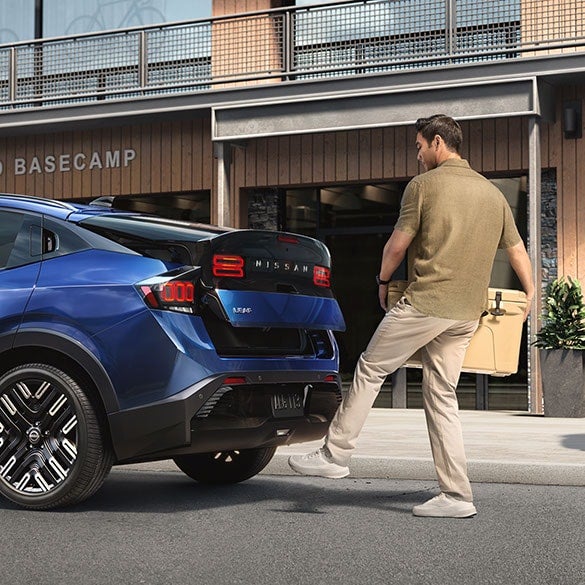
The LEAF shines as an economical daily driver that excels in short-distance commuting and urban maneuverability. Its tighter turning radius makes navigating suburban shopping centers simple, while its hatchback tailgate handles gear and groceries with ease. Buyers considering trading in their current gas vehicle can take advantage of valuing your trade in online to offset purchase costs. Explore our current new Nissan ARIYA selection or check out new Nissan LEAF models to find the exact match for your routine.
Which Nissan ARIYA Trim Offers the Longest Driving Range and What Is the Price Range Across Trims?
The Nissan ARIYA Venture+ front-wheel-drive trim level achieves the longest driving range in the lineup with an EPA-estimated 304 miles on a single charge. Across the broader ARIYA lineup, starting sticker prices range from $41,160 MSRP for base models up to approximately $55,760 MSRP for fully equipped top-tier trims.
The ARIYA lineup utilizes two distinct battery configurations. The entry-level Engage trim features a 63-kWh battery delivering 214 hp, 221 lb-ft of torque, and an EPA-estimated driving range of 216 miles. Upgrading to "+" designated trim levels introduces the extended-range 87-kWh battery, which expands driving range significantly while boosting motor output to 238 hp on single-motor models and up to 389 hp on dual-motor variants.
| Trim Level | Battery Size | Drivetrain | EPA Estimated Range |
|---|---|---|---|
| Engage | 63 kWh | FWD | 216 miles |
| Engage+ | 87 kWh | e-4ORCE AWD | 272 miles |
| Venture+ | 87 kWh | FWD | 304 miles |
| Evolve+ | 87 kWh | FWD / e-4ORCE AWD | 272 - 289 miles |
| Platinum+ | 87 kWh | e-4ORCE AWD | 257 - 267 miles |
When local commuters visit our lot to compare configurations, the question that comes up most often on a test drive is whether the single-motor front-wheel-drive model or the dual-motor all-wheel-drive setup better aligns with their highway habits. Mid-tier trims like the Evolve+ hit a balanced sweet spot for many buyers by offering convenience features like a panoramic moonroof, wireless smartphone charging, and 360-degree camera views paired with generous extended range. Shoppers who still prefer conventional gasoline powertrains can also evaluate our new Nissan Altima inventory for comparison before making a final commitment.
How Does Nissan e-4ORCE All-Wheel Drive Work and How Does ARIYA Compare to Tesla Model Y?
Nissan e-4ORCE all-wheel drive uses twin electric motors mounted on the front and rear axles to independently monitor and adjust torque and braking force at all four wheels in milliseconds. When compared to the Tesla Model Y, the Nissan ARIYA emphasizes superior cabin quietness, refined ride comfort, and physical dashboard controls over aggressive acceleration track stats.
The technical strength of e-4ORCE lies in its pitch control and chassis management. Traditional all-wheel-drive systems respond to wheel slip after traction is lost. Nissan's electric dual-motor setup continuously regulates front and rear motor regenerative braking during deceleration, stopping the front end from diving when slowing down. This creates a remarkably flat, calm ride for passengers across uneven road surfaces and provides steady grip during rainstorms.
In a direct side-by-side comparison with the Tesla Model Y, both electric SUVs offer competitive seating for five passengers, but their interior philosophies differ:
- Interior Space and Comfort: The ARIYA delivers 101 cubic feet of total passenger volume with 42 inches of front legroom, closely matching the Model Y's 42 inches of front legroom. However, the ARIYA features Zero Gravity front seats and thick acoustic glass that isolates road noise better than the Tesla cabin.
- Cargo and Utility: The Tesla Model Y holds an advantage in maximum cargo volume, offering 75 cubic feet with rear seats folded versus 60 cubic feet in the ARIYA (and 23 cubic feet with seats upright). The Model Y also tops out at 3,500 lb of towing capacity, whereas the ARIYA is rated for up to 1,500 lb.
- Ergonomics and Interface: While Tesla concentrates all functions into a central touchscreen, the ARIYA integrates touch-sensitive haptic climate controls directly into its wooden dash trim alongside a physical audio volume knob, keeping daily adjustments simple.
How Does Leasing a Nissan ARIYA Compare to Purchasing One?
Leasing a Nissan ARIYA delivers lower initial financial commitment, lower monthly payments, and flexibility to upgrade every 24 to 36 months, whereas purchasing builds equity and removes all mileage limitations. Deciding between a lease contract and traditional purchase financing comes down to your personal driving habits and ownership timeline.
A lease agreement functions essentially as a term contract where you pay for the vehicle's projected depreciation over two to three years rather than its full purchase price. This structure keeps monthly outlay lower and protects you against long-term battery technology shifts. At the end of the lease term, you simply return the vehicle, settle any excess wear or mileage fees, and step into a new model featuring the latest battery efficiency and driver-assist software.
Purchasing an ARIYA with conventional financing makes sense if you plan to drive more than 12,000 to 15,000 miles per year or intend to keep the vehicle well beyond its warranty period. Ownership gives you total freedom to modify the crossover, eliminates lease return inspections, and leaves you with an asset once the vehicle loan is paid off. Under federal tax law changes enacted in July 2025, federal clean vehicle tax credits under IRC §30D terminated for vehicles acquired after September 30, 2025. Today's buyers purchase directly based on dealer pricing and manufacturer incentives, making direct price comparisons straight to the point.
What Buyers Ask Most About Nissan Electric Vehicles
Q: What is the real-world driving range of the Nissan ARIYA on a single charge?
Depending on the trim level and battery configuration, the Nissan ARIYA delivers an EPA-estimated driving range between 216 miles on the base 63-kWh battery and up to 304 miles on extended-range 87-kWh battery models. Actual highway range varies based on driving speed, ambient outdoor temperature, and climate control usage, but most daily drivers comfortably cover a full week of local commuting between charging sessions.
Q: How long does it take to charge a Nissan ARIYA at home versus a fast charger?
Using a standard 240-volt Level 2 home charger, a fully depleted long-range ARIYA battery recharges completely in approximately 10 to 14 hours overnight. At a public DC fast-charging station capable of 130 kW output or higher, the ARIYA recharges from 20% to 80% battery capacity in about 40 minutes, allowing for convenient power stops during longer road trips.
Q: Does the Nissan LEAF come with Tesla Supercharger network compatibility?
Configured models of the Nissan LEAF equipped with the built-in NACS port and Plug & Charge software can access compatible Tesla Supercharger stations across North America. Network access terms and charging adapter requirements depend on the specific station location and vehicle build date.
Q: What warranty coverage protects the battery in a new Nissan electric car?
Nissan covers all new electric vehicle lithium-ion battery packs under a dedicated 8-year/100,000-mile battery warranty against operational defects and capacity loss below nine bars of capacity. This EV battery protection sits alongside the standard 3-year/36,000-mile basic warranty and 5-year/60,000-mile powertrain warranty.
Q: Do new Nissan electric cars qualify for current federal EV tax credits?
Federal clean vehicle credits under IRC §30D terminated on September 30, 2025. Vehicles acquired after that date do not qualify for federal tax credits. Present-day buyers take advantage of direct competitive pricing, flexible dealer financing options, and attractive regional promotions instead.
Navigating the transition to electric driving is straightforward with the right support. Our team at Jim Keras Nissan is ready to walk you through trim levels, explain home charging setups, and set you up with a personal test drive on Covington Pike. Check out our showroom address to map your route, or give our sales desk a quick call today at (901) 373-2800 to take the next step toward your new electric vehicle.
Keep Your Vehicle Running Strong
Keep your vehicle performing at its best with our service team: